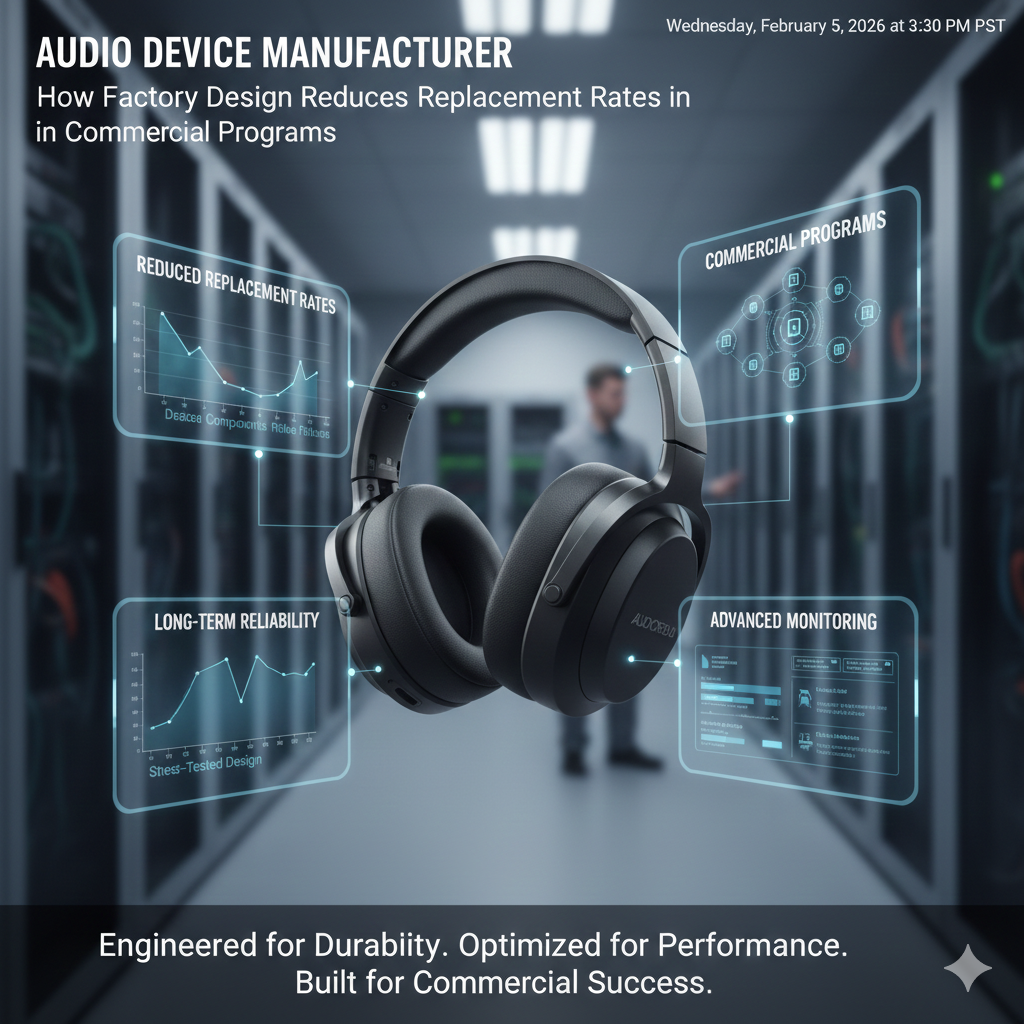
Replacement Rates Are a Manufacturing Outcome, Not a Usage Problem
In many commercial programs, rising replacement rates are often attributed to intensive use or user behavior. However, analysis across long-term deployments shows that replacement frequency is more closely linked to manufacturing decisions than to usage volume alone.
Audio devices deployed across offices, industrial sites, or multi-location programs are exposed to repeated wear patterns that are both predictable and measurable. When products begin to show uneven fit, material collapse, or inconsistent performance after months of use, the underlying cause is typically insufficient structural stability or material resilience. These issues surface gradually, making them costly to address once devices are already in circulation.
A capable audio device manufacturer approaches replacement reduction as a design and production challenge rather than a post-deployment maintenance issue.
How Manufacturing Decisions Influence Replacement Frequency Over Time
Replacement rates increase when products experience performance drift that affects usability. This drift may include gradual loss of clamping consistency, deformation of cushioning materials, or misalignment of acoustic components. Each of these outcomes traces back to choices made during product design and production setup.
A professional audio device manufacturer evaluates products based on extended operating cycles rather than short-term inspection. Structural elements are assessed for fatigue behavior, materials are selected for recovery stability, and assembly tolerances are fixed to prevent cumulative variation. These practices ensure that performance remains within acceptable ranges throughout the intended service life.
Without this long-cycle perspective, products may meet initial acceptance criteria yet require frequent replacement during normal commercial use.
Structural and Material Controls That Extend Service Life
Reducing replacement rates depends on coordinated control across several manufacturing dimensions:
-
Stable load-bearing structures
Headbands, housings, and adjustment mechanisms are designed to maintain consistent force and geometry after repeated use, preventing gradual fit degradation. -
Materials selected for recovery behavior
Cushion foams and contact surfaces are chosen based on compression recovery and thermal resistance, ensuring shape and comfort are retained over time. -
Controlled tolerance management
Fixed production tolerances reduce variation between units and batches, limiting early failure caused by cumulative misalignment. -
Secure acoustic component placement
Drivers and microphones are mounted to prevent positional drift that could degrade sound or voice performance.
An experienced audio device manufacturer integrates these controls into routine production rather than relying on corrective actions after deployment.
Replacement-Focused Manufacturing Compared with Reactive Supply
| Program Aspect | Reactive Manufacturing Approach | Replacement-Optimized Manufacturing |
|---|---|---|
| Replacement Rate (12–18 months) | 25–30% | 10–15% |
| Primary Failure Cause | Wear-related drift | Controlled degradation |
| Batch Consistency | Variable | 90–95% alignment |
| Internal Support Requests | Frequent | Reduced |
| Deployment Interruptions | Common | Minimal |
| Long-Term Cost Visibility | Limited | Predictable |
Key takeaway: replacement reduction is achieved by minimizing performance drift, not by increasing spare inventory.
Commercial Deployment Scenarios Where Replacement Reduction Matters Most
Replacement rates have different impacts depending on deployment context, but manufacturing stability benefits all scenarios.
1. Enterprise office programs
Lower replacement frequency reduces internal coordination and improves user continuity.
2. Shared workstations
Durable structures and materials prevent uneven wear caused by multiple users.
3. Industrial and operational environments
Extended shifts demand products that retain performance under sustained mechanical load.
4. Multi-site rollouts
Consistent behavior across locations simplifies replacement planning and inventory control.
5. Long-term procurement cycles
Stable service life supports predictable budgeting over 24–36 month periods.
Working with an audio device manufacturer aligned to these scenarios helps organizations limit replacement-related disruption.
How Replacement Reduction Supports Long-Term Cost Control
Over a 24–36 month lifecycle, replacement costs extend beyond unit pricing. Each replacement involves logistics, administrative effort, and potential downtime. High replacement rates compound these indirect costs and disrupt planned procurement cycles.
Manufacturing approaches that stabilize product behavior help organizations shift from reactive replacement to planned lifecycle management. Predictable service life enables clearer budgeting, fewer emergency purchases, and smoother coordination between procurement, IT, and operations.
At Skyringe, production practices focus on stabilizing structural performance, material behavior, and assembly consistency. These measures directly support lower replacement frequency and improved cost predictability across commercial programs.
For organizations partnering with an audio device manufacturer, replacement reduction becomes a structural outcome rather than an ongoing operational concern.
Working with Skyringe as an Audio Device Manufacturer
Skyringe operates as an audio device manufacturer supporting commercial and industrial programs with an emphasis on long-term service stability. Our manufacturing approach prioritizes structural durability, material consistency, and repeatable production to help reduce replacement rates over extended deployment.
To review available audio device categories, visit:
👉 https://szty-b.pinshop.com/products
To learn more about our production practices and manufacturing capabilities, visit:
👉 https://szty-b.pinshop.com/about-us
Common Buyer Questions
Q: What most often causes high replacement rates in commercial audio programs?
A: Structural instability, material fatigue, and batch inconsistency rather than usage intensity alone.
Q: How can manufacturers influence replacement frequency before deployment?
A: By controlling design stability, material recovery, and production tolerances.
Q: Why is replacement reduction important for long-term programs?
A: Because it lowers indirect costs, simplifies planning, and improves operational continuity.